CURRENCY REDESIGN
Patterns in Currency
ROLE
Designer
TOOLS
Illustrator, Photoshop
YEAR
2024
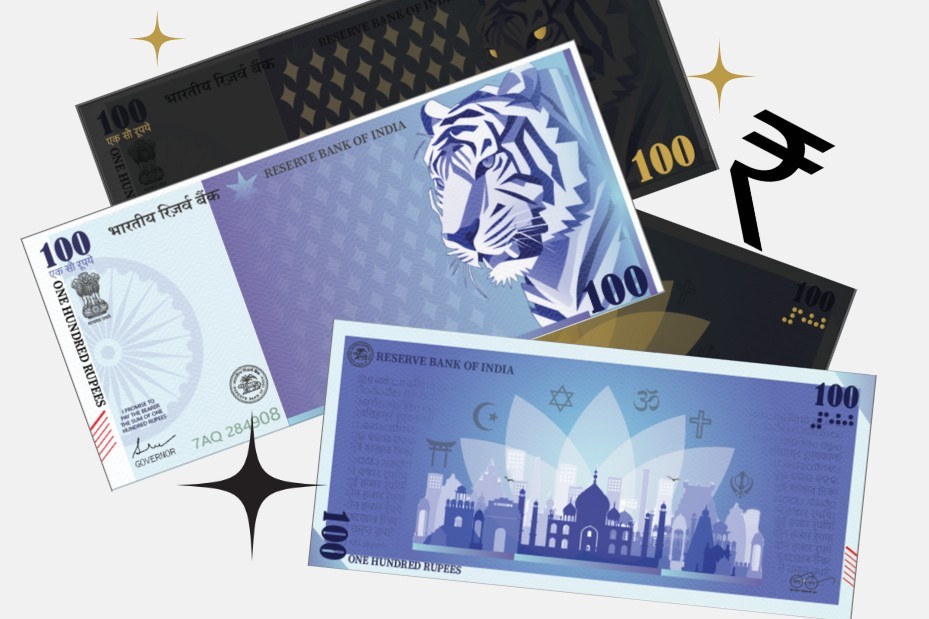
The goal of this project was to design a single currency note, front and back, of a country using various design principles and elements to create a visually compelling and authentic design.
Background
I chose India as the basis for this project due to my personal experience living there, which provided me with valuable insight into its history and culture. India boasts a rich and diverse cultural heritage spanning thousands of years. It is known for its vibrant traditions, diverse religious practices, iconic landmarks such as the Taj Mahal, Red Fort, and Gateway of India, and national symbols like the Tiger and Peacock. India's dedication to peace and non-violence, as championed by figures like Mahatma Gandhi, is also central to its identity.
To better understand Indian culture and currency design, I interviewed an Indian individual who has lived there for many years. This provided me with significant insights and perspectives on the currency’s symbolism, values, and aesthetic elements. Based on the interview and research, I identified several key aspects to guide my design process:
Cultural Diversity: India’s rich culture includes various languages, traditions, and cuisines. Incorporating symbols representing this diversity, such as regional landmarks and flora and fauna designs, would resonate with the population.
Historical Icons Beyond Gandhi: While Mahatma Gandhi’s presence on the currency is significant, there is a desire to see representation of other historical figures or landmarks that reflect India's multifaceted heritage.
Symbolism and Meaning: Including symbols from Hindu and Islamic mythology, such as the Om symbol or motifs representing various deities, can deepen the connection between the currency and India's spiritual and historical identity.
Reflecting Regional Identity: Featuring landmarks and elements from various regions, such as the Charminar for Hyderabad or the Himalayas for northern states, can celebrate the uniqueness of each region.
Adaptation to Modernity: Balancing cultural heritage with modern design trends and security features enhances credibility and mitigates counterfeit risks.
Based on the insights gathered, I developed a design approach that emphasizes cultural representation, aesthetic appeal, and enhanced security features. The elements incorporated include:
Foreground, Middle Ground, and Background to create depth and visual interest.
Various types of balance, including radial, symmetrical, and asymmetrical balance.
Patterns and textures to enhance visual unity and cultural relevance.
Security features, such as UV elements that glow gold under blacklight.
I created 12 sketches of possible designs for the currency note, experimenting with different compositions and arrangements for the front and back. Each design included essential features such as the serial number, bank seal, bank name, country name, signature, denomination in numerals and letters, and braille for the visually impaired.

Design Highlights
Tiger and Peacock Motif: Inspired by India's national animals, featuring them prominently on the front design.
Skyline Collage of Landmarks: Integrating a collage of major landmarks, including the Taj Mahal and Red Fort, to represent India’s diverse heritage.
UV Security Feature: Incorporating elements like the peacock’s feathers and the tiger’s eye to glow under UV light, enhancing authenticity and aesthetic appeal.
I developed the final designs using Adobe Illustrator and Photoshop, focusing on:
Monochromatic Color Scheme: Creating an appealing, cohesive look while maintaining clarity.
Textural Details: Adding background patterns and textures inspired by traditional Indian motifs.
Security Elements: Including both visible and UV-specific designs to prevent counterfeiting.
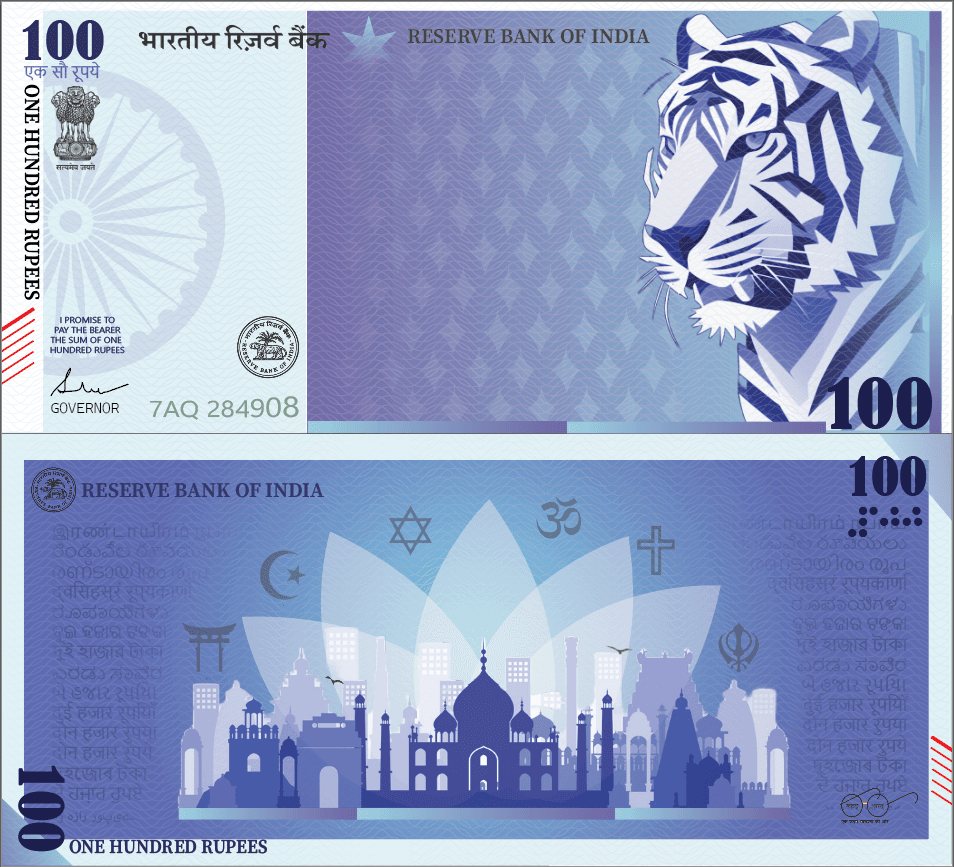

Feedback from peers helped improve my design by suggesting adjustments to the composition, enhancing the clarity of the text in various languages, and refining the placement of elements to achieve better balance and rhythm. Additionally, symbols representing various Indian cultures were added to celebrate diversity.



This project was one of the most challenging yet rewarding assignments I have worked on, encompassing multiple design principles learned throughout the semester. From emphasis and focal points to balance, rhythm, and color theory, I applied a range of techniques to create a cohesive and meaningful design. The experience gained from this assignment will be invaluable for my future projects.